Demystifying the Architecture of a Million-User Live Chat System: Why WebSockets Aren’t Always the Answer
When software engineers think about real-time chat applications, 90% immediately lean toward WebSockets. This protocol establishes a persistent, bi-directional (full-duplex) connection between the client and server, allowing data to flow back and forth instantly.
However, for massive live streaming platforms hosting millions of concurrent viewers, maintaining millions of open WebSocket connections simultaneously is incredibly expensive and easily leads to system bottlenecks. So, how do high-scale system engineers solve this smoothly? The answer lies in a different architectural mindset: HTTP-based Adaptive Polling.
Let’s dive deep into the technical architecture to understand how this operates under the hood.
1. The Reality of the Data Flow
Instead of embedding the chat logic directly into the main page, large-scale systems typically isolate the chat display within an <iframe>. Let’s open this in a new tab and inspect the network traffic inside this iframe during a high-traffic live stream.
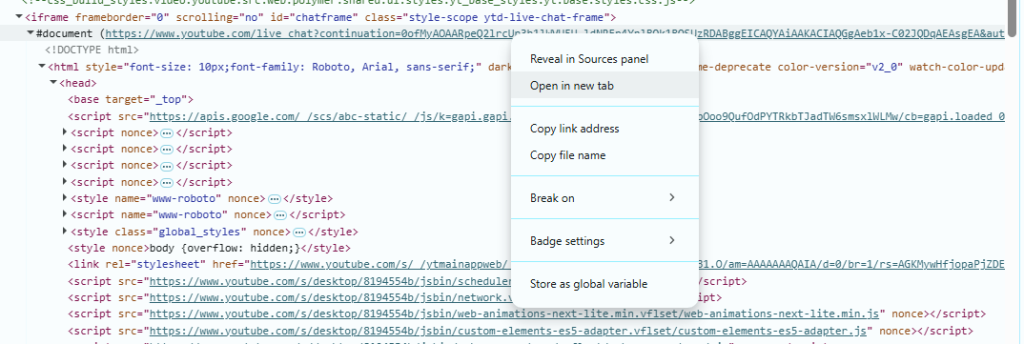
You will notice something surprising: There are absolutely no active WebSocket connections.
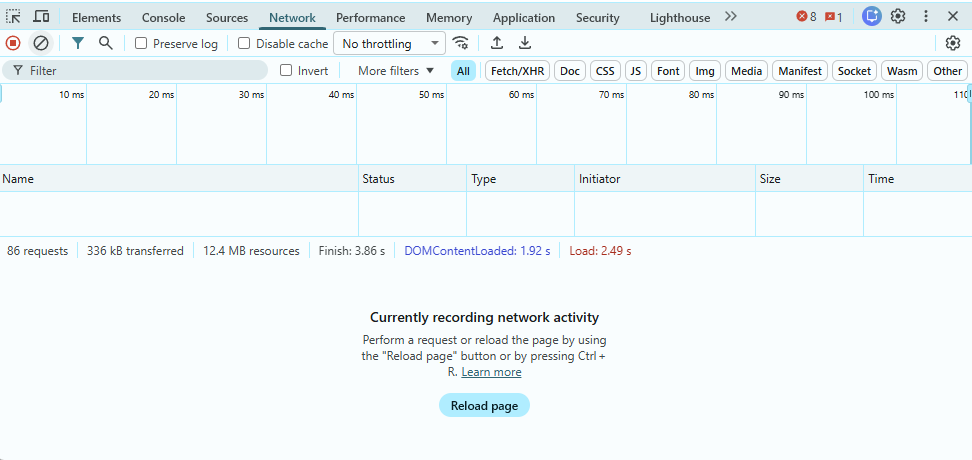
Instead, the entire message sending and receiving lifecycle is handled via standard HTTP requests:
- Receiving Messages: The client continuously sends
GETrequests (e.g., an API endpoint like/get_live_chat) to pull down new data. - Sending Messages: When a user types and sends a message, the system triggers a standard HTTP
POSTrequest (e.g.,/send_message).
2. The Core Mechanism: Pagination and Continuation Tokens
To prevent the client from downloading duplicate messages or losing track of where it left off, the server utilizes a specific piece of data in both the Request Payload and Response JSON called a continuation token (also known as a Continuation Token or Cursor).
- The Request: The client sends the current
continuationtoken to tell the server: “I have read up to this point. Please give me any new messages that have appeared since this specific marker.” - The Response: The server returns an array of new messages (often wrapped in payload blocks like
addChatItemAction) along with a brand-newcontinuationtoken, prepping the client for its next API call.
3. The Optimization Secret: Adaptive Polling
If this were basic polling (e.g., forcing the client to hit the API blindly every 1 second), the server infra would collapse under a landslide of requests during peak traffic. To solve this, engineers implement a technique called Adaptive Polling (Intelligent Rate-Limiting).
Inside the JSON response payload sent by the server, there is almost always a field specifying a dynamic wait time, such as timeoutMs: 10000 (10 seconds).
This interval is not fixed. It shifts dynamically based on chat density and room velocity:
- Low Chat Volume (Quiet Rooms): The server pushes
timeoutMshigher (e.g., 10 or 15 seconds). The client backs off and spaces out its API requests, protecting the server from unnecessary load. - High Chat Volume (Explosive Rooms): The server drops
timeoutMslower (e.g., 1, 2, or 5 seconds). The client polls more frequently to fetch data faster, preserving the real-time feel.
4. Why HTTP Polling Trumps WebSockets in Live Streaming Scenarios
Choosing HTTP over WebSockets for high-scale live chat delivery offers five major strategic advantages:
- 1. Seamless Global Scalability: Standard HTTP requests can naturally leverage existing global infrastructure like CDNs (Content Delivery Networks), reverse proxies, and traditional Load Balancers. The server layer doesn’t need to burn hardware resources (RAM and CPU) maintaining the state of millions of persistent connections, unlike WebSockets.
- 2. Built-in Server-Side Load Regulation: Because the server retains absolute control over the polling interval through the
timeoutMsvariable, it can dynamically throttle or accelerate incoming traffic in real-time depending on backend capacity and room engagement. - 3. Server-Controlled Business Logic: A user’s entire read state is encapsulated neatly into the
continuationtoken. If backend engineers want to tweak system logic (e.g., introducing anti-spam features, bot mitigation, or forcing artificial delays), they can alter how the token is generated on the server. The client-side code remains entirely untouched. - 4. Robust Fault Tolerance and Failure Recovery: If a WebSocket connection drops, writing the code to handle reconnection, state re-synchronization, and backfilling missed messages is notoriously complex. With HTTP, if a request fails, the client simply retries the request using its last known valid
continuationtoken. If an entire server cluster dies, standard HTTP routing easily shifts the request to another healthy cluster without breaking the user experience. - 5. Achieving “Good Enough” Real-Time In live streams, the video broadcast itself naturally suffers from a playback latency of anywhere from 2 to 30 seconds. Because of this, chat messages don’t actually need millisecond-level, instantaneous delivery to feel live. Updating messages every couple of seconds via Adaptive Polling perfectly satisfies user expectations, delivering a “perceived real-time experience” while saving millions of dollars in infrastructure costs.
Final Thoughts
The architecture of utilizing HTTP Polling for massive live chat systems is a prime reminder of a fundamental engineering truth: The trendiest technology (like WebSockets) is not always the best tool for every problem. Understanding the core characteristics of your network protocols and combining them with smart patterns like Adaptive Polling is how you build sustainable, cost-effective systems that gracefully support millions of users.